
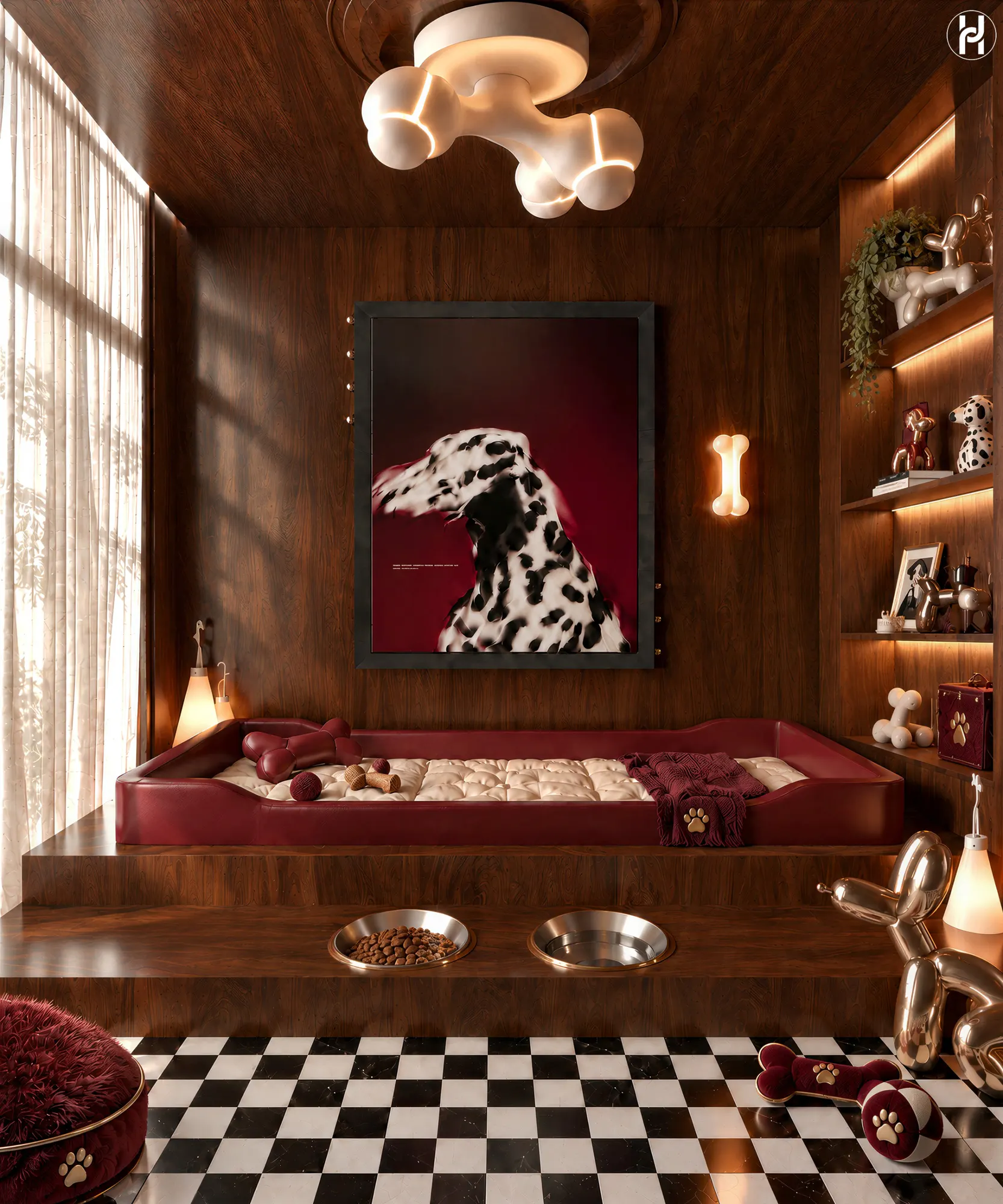
What happens when a dog’s needs become part of the design brief? Egyptian architect and interior designer Ahmed Hussein explores the relationship between sophisticated interiors and canine wellbeing through a dedicated dog room concept for Canine Society. From thoughtful materials to spaces that reflect everyday life, he reimagines what it means to design a home for every member of the family.
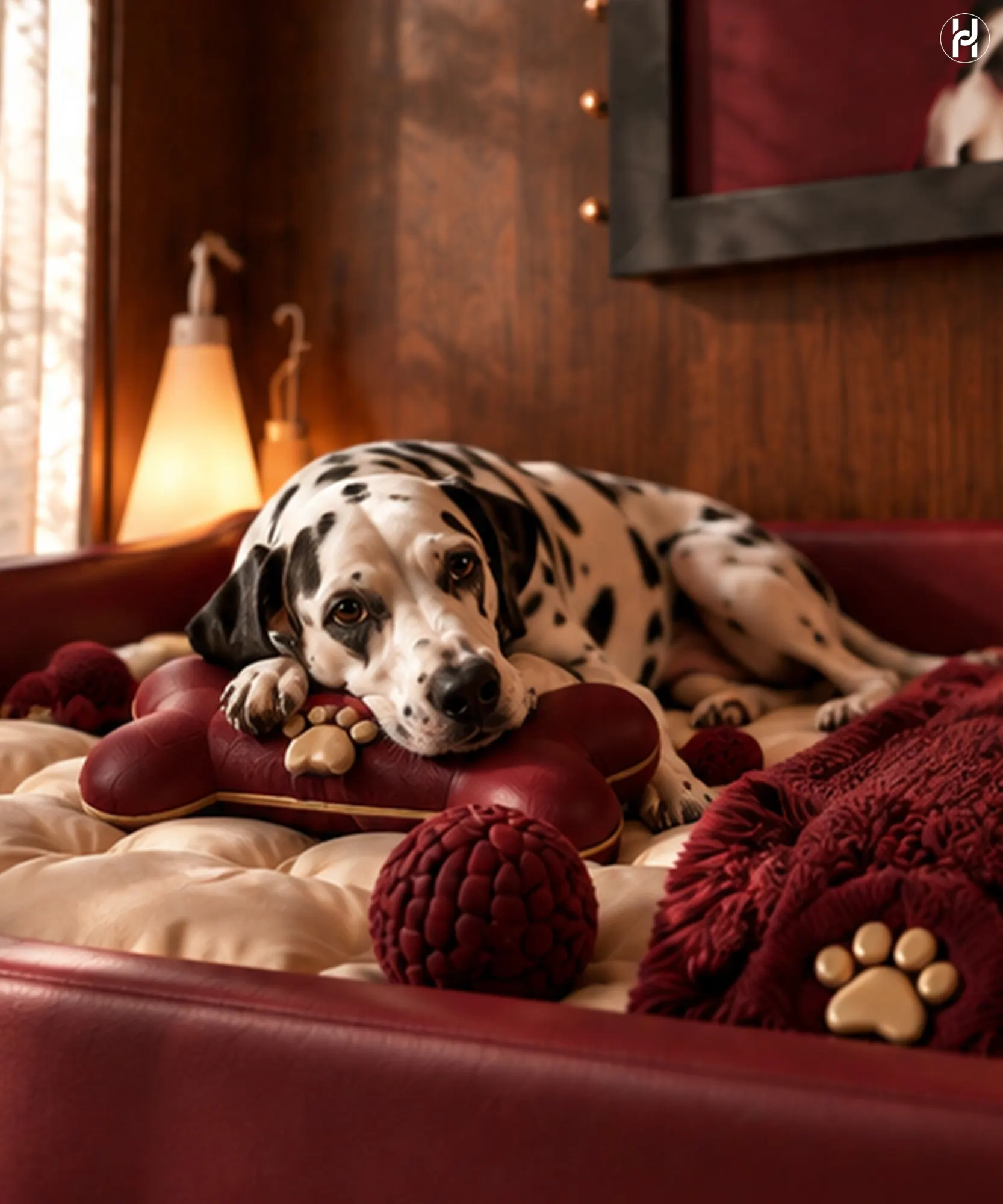
You founded your studio in Egypt in 2008. What has shaped your journey as a designer, and how has your signature evolved?
Ahmed Hussein: “Starting my studio in Egypt in 2008 shaped the way I understand homes: as places with personality, warmth and a strong connection to how people live. As my work has developed, my design language has become more confident in its contrasts between materials, forms and styles. Today, I’m less interested in following a particular look and more interested in creating a space with its own identity. The common thread is always the person living there.”
Designing for dogs starts with understanding their behaviour. The visual language can belong to the owner, but the experience has to make sense for the dog.
Your philosophy centres on spaces that reflect the people who inhabit them. How does that vision translate when designing for dogs?
Ahmed Hussein: “A home should reflect everyone who shares it, and dogs are part of that story. The same attention we give to someone’s routines should extend to their pets: where they rest, how they move, what they enjoy and when they need quiet. Designing for dogs starts with understanding their behaviour. The visual language can belong to the owner, but the experience has to make sense for the dog.”
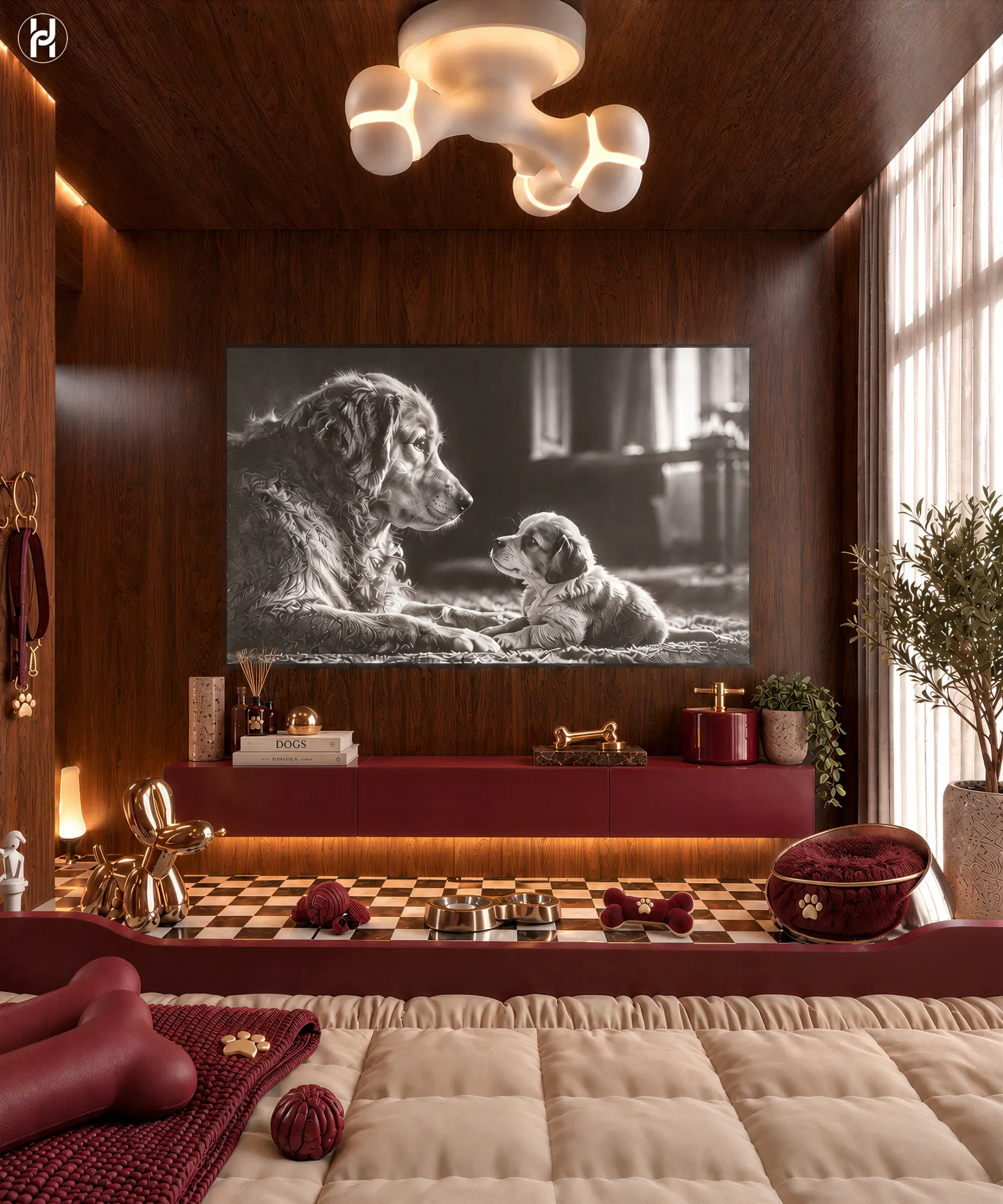
What inspired your Canine Society dog room project, and what makes a space exceptional for both dogs and their owners?
Ahmed Hussein: “The starting point for this concept is a simple question: what would happen if we gave a dog’s space the same design attention as any other room in the home? I imagine a comfortable retreat with areas for rest, feeding and play, alongside practical storage for everyday essentials. What makes it exceptional is how naturally it supports daily life. It should offer the dog somewhere to settle while keeping them connected to the household.”
A beautiful photograph is only one measure of success; the space also needs to work comfortably every day for the dog and its owner.
Are you seeing growing demand for bespoke pet-friendly interiors? How is the expanding pet market influencing residential design?
Ahmed Hussein: “I think the growing visibility of pet-focused products reflects a wider shift: people increasingly see their pets’ needs as part of the brief for their home. That opens up more thoughtful conversations about feeding areas, washable finishes, storage and furniture. For me, the most interesting opportunity is bringing those decisions into the design early. Even a modest home can accommodate a pet beautifully when their needs are considered from the beginning.”
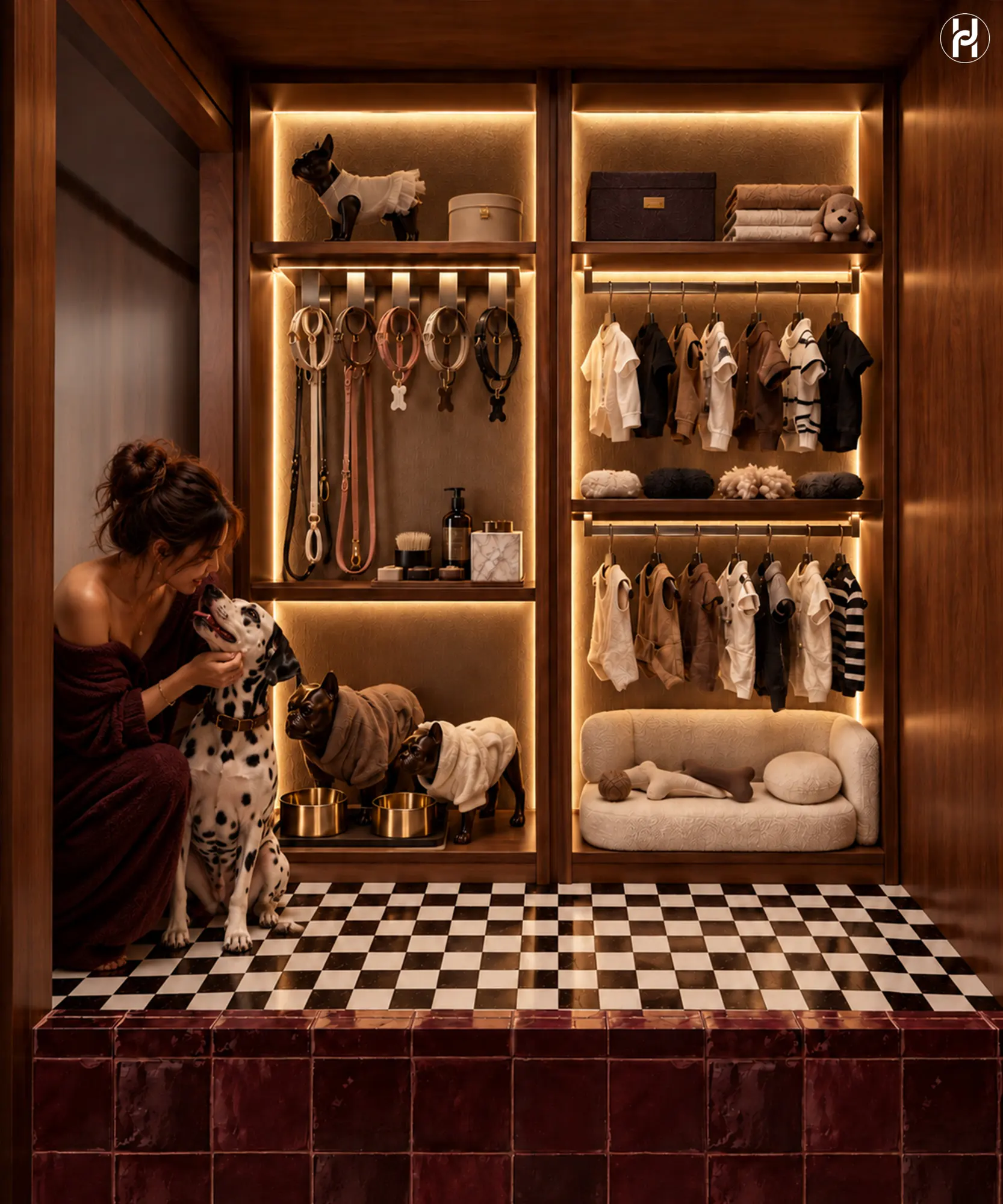
How do you balance sophisticated design with dogs’ practical needs, from comfort and safety to durable materials?
Ahmed Hussein: “I begin with practical decisions: surfaces that offer good grip, fabrics that are easy to clean, durable finishes and comfortable places to rest. Rounded edges, secure storage and avoiding accessible small decorative elements also deserve attention. From there, I use proportion, colour and detailing to bring everything into the wider interior. A beautiful photograph is only one measure of success; the space also needs to work comfortably every day for the dog and its owner.”
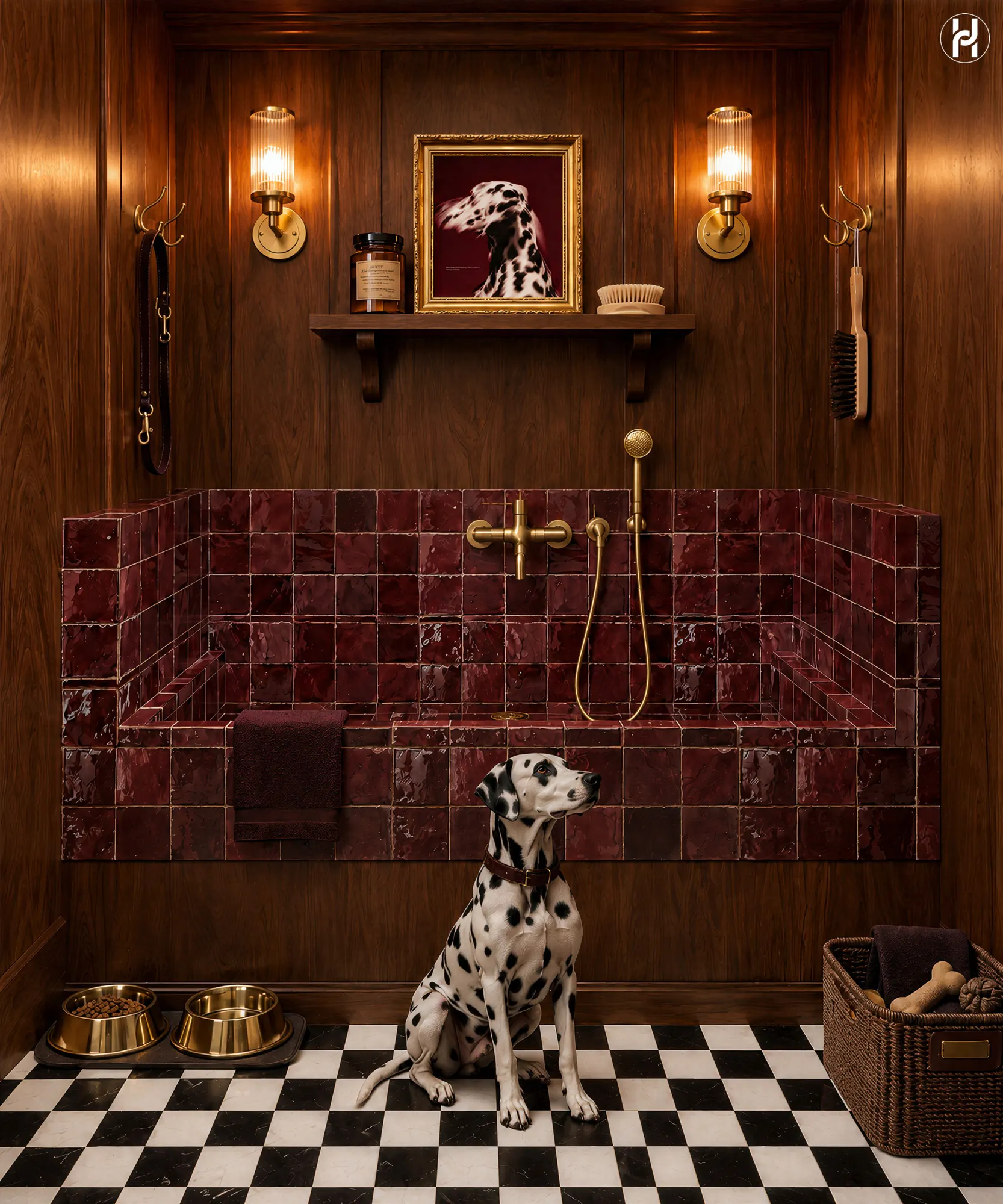
Will dedicated dog rooms and bespoke pet furniture become the new standard in contemporary homes? Where do you see the greatest opportunities for designers?
Ahmed Hussein: “I see thoughtful pet-friendly features becoming more common, although a dedicated dog room will depend on the size of the home and the family’s lifestyle. Sometimes an integrated resting nook or a well-designed feeding station is the better solution. The greatest opportunity for designers is to make these features feel natural within the home. There is also room for more bespoke furniture that considers a dog’s size, habits and changing needs as they age.”
A home should reflect everyone who shares it, and dogs are part of that story.