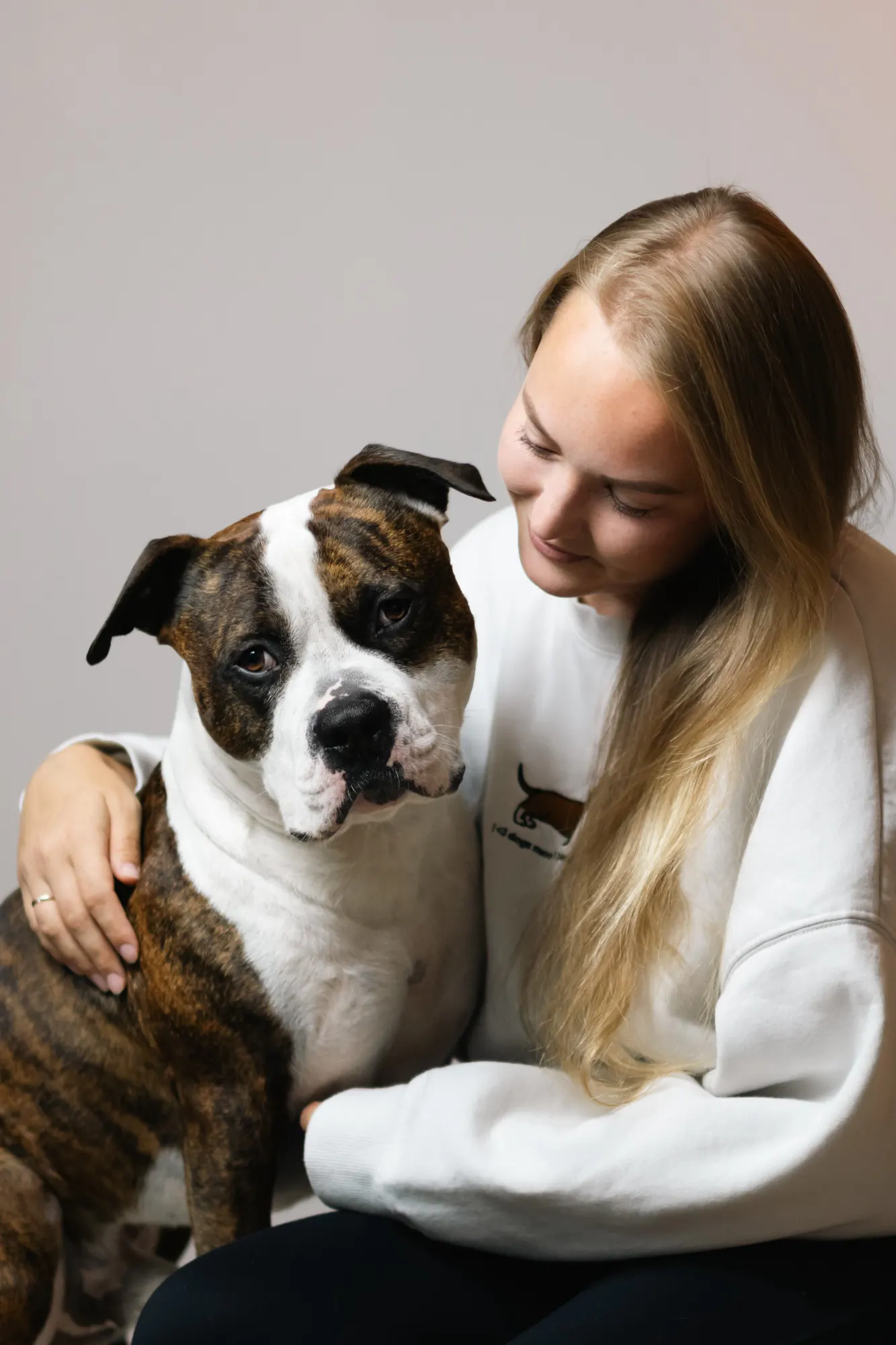
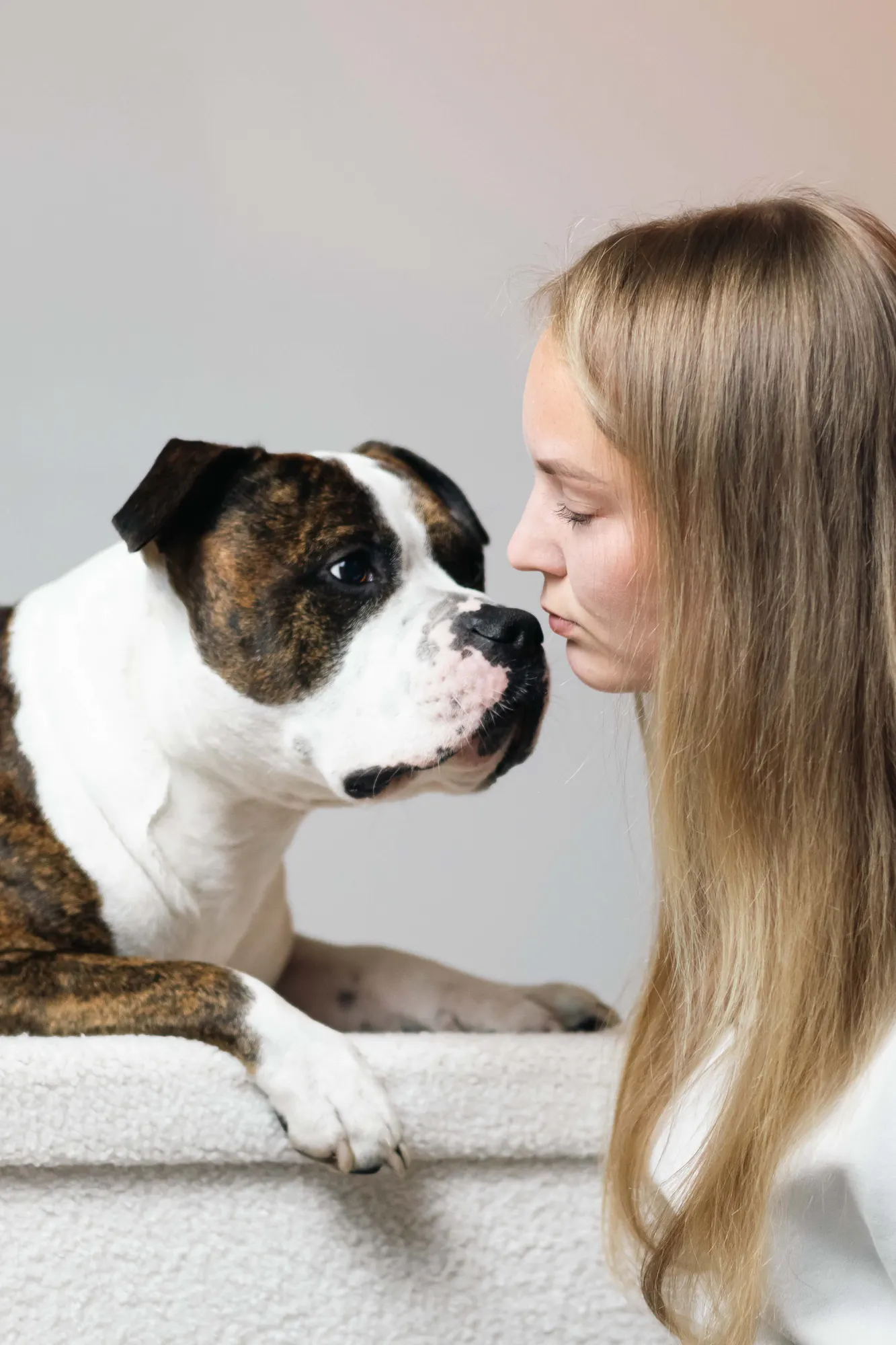
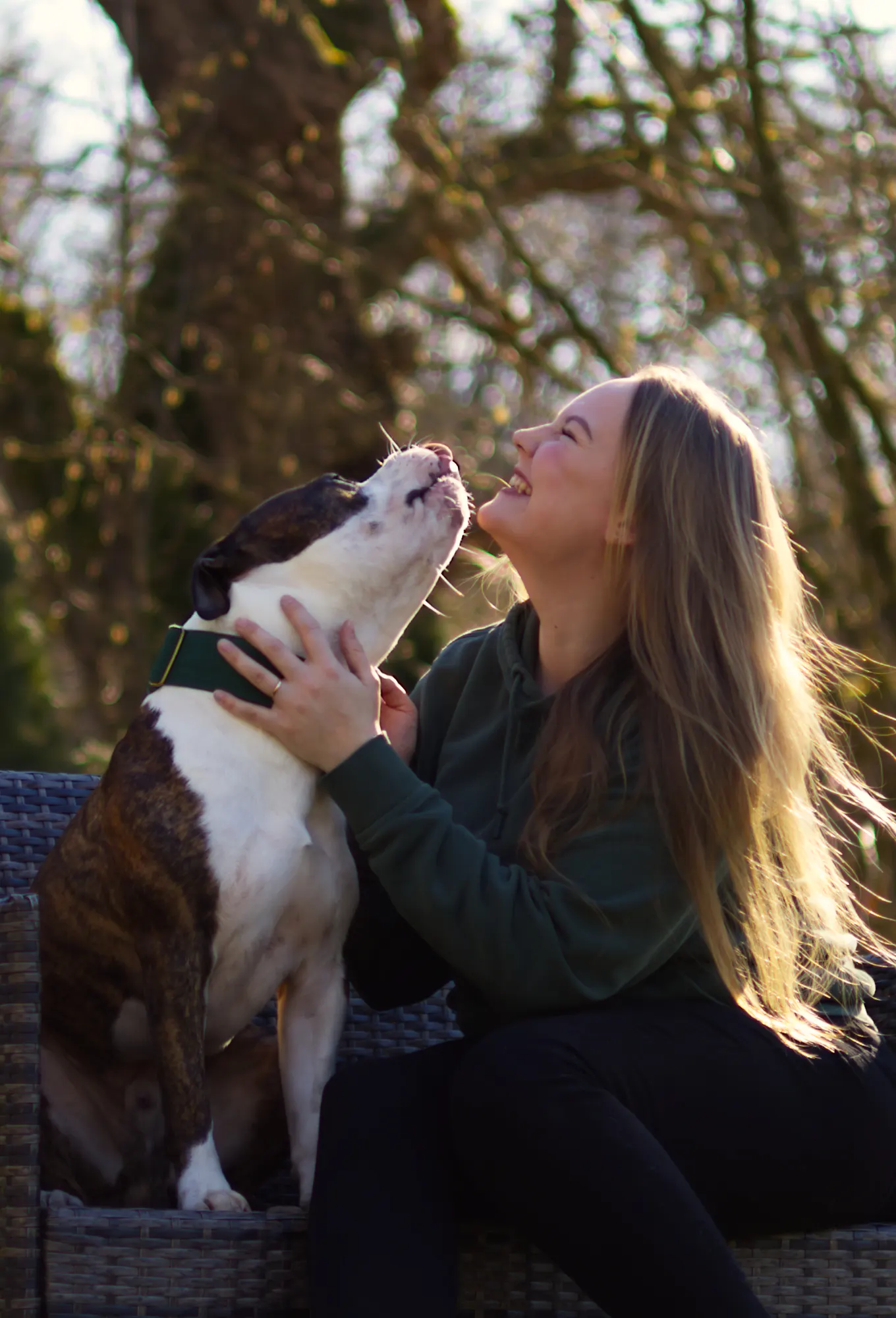
For Jessica Wlasenko, Urmel is far more than a breed or a label. Through their humorous social media account, she hopes to challenge stereotypes surrounding so-called listed breeds and show the dog behind the headlines. We spoke to Jessica about life with an AmStaff, the responsibility of owning a powerful dog, and how Urmel has changed the way people see him.
How did you get into creating comedy content with Urmel, and what made you decide to create an account for your dog?
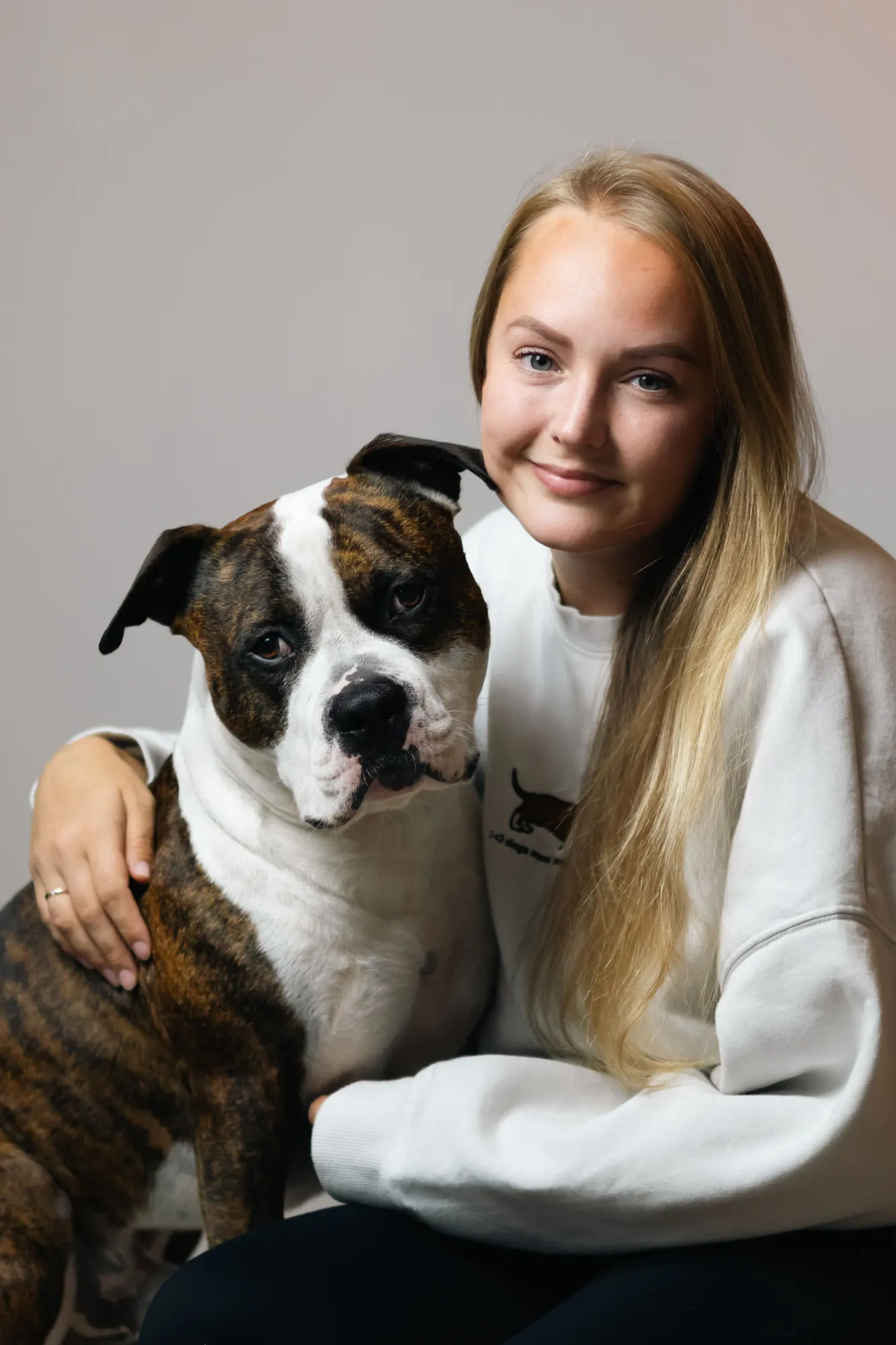
Jessica Wlasenko: “I originally started the account because I didn’t want to constantly spam my friends with endless photos and videos of my dog. I wanted to find like-minded people who also loved sharing content about their dogs. Pretty quickly, the idea came up to use social media to give so-called listed breeds a voice. I wanted people to think of Urmel’s photos and videos when they heard the word ‘AmStaff’ and hopefully associate the breed with something positive. I realised that when I approach the subject in a funny and light-hearted way, people are much more open to listening.”
Where do your ideas come from, and was Urmel always comfortable taking part?
Jessica Wlasenko: “Most of the ideas come to me spontaneously. Whenever I think of something, I immediately write it down in my notes. But honestly, Urmel is often just naturally hilarious. When he’s cuddling his little stuffed pig, for example, all I really have to do is film him. From the very beginning, we’ve made sure that filming videos is a positive experience for him. Of course, there are always treats involved! I always pay close attention to how he’s feeling. If it becomes too much for him, we stop and continue another day. Urmel’s wellbeing will always come first.”
Who is Urmel when you don’t see him as a “dangerous breed,” but simply as a dog?
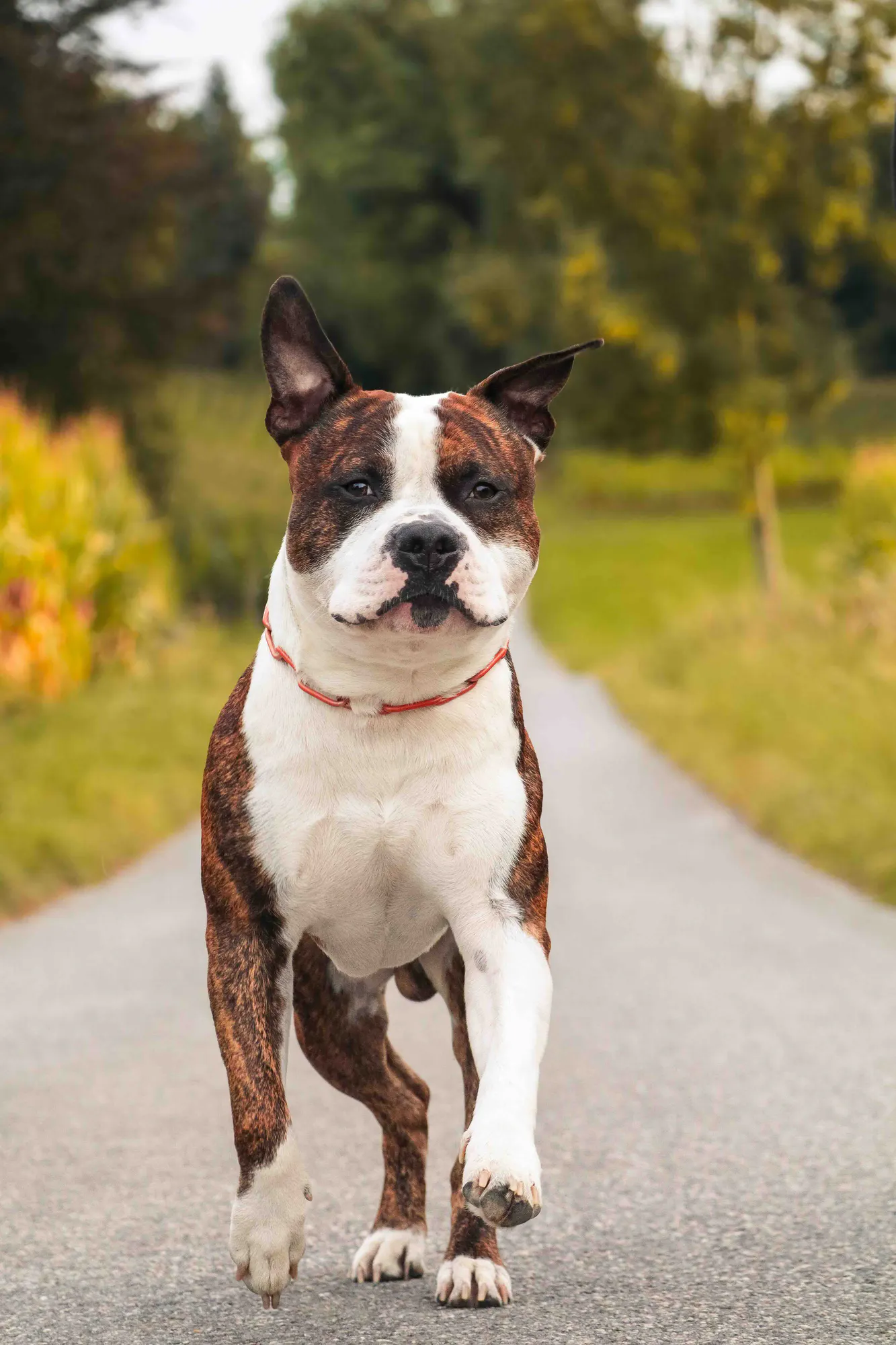
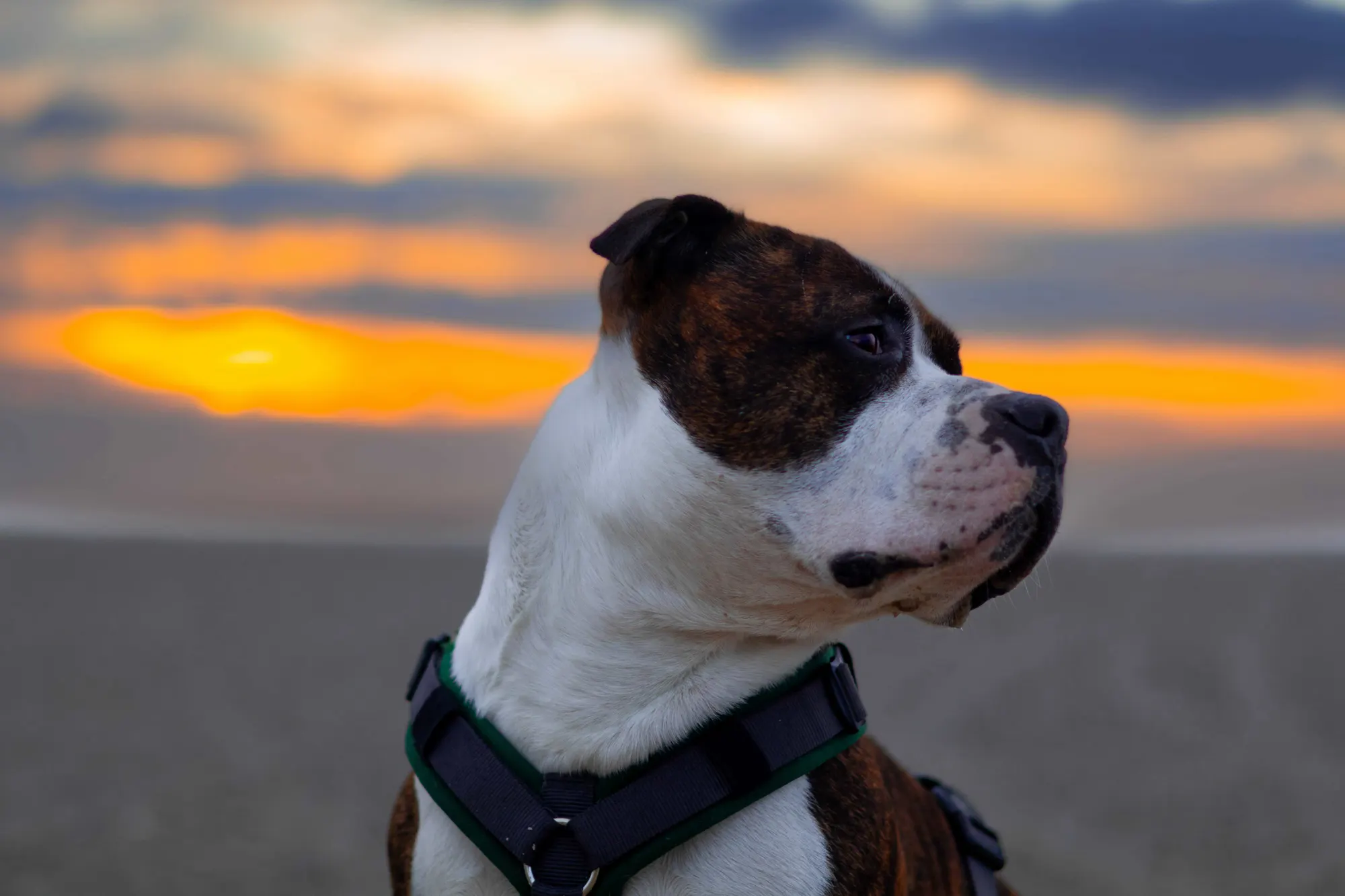
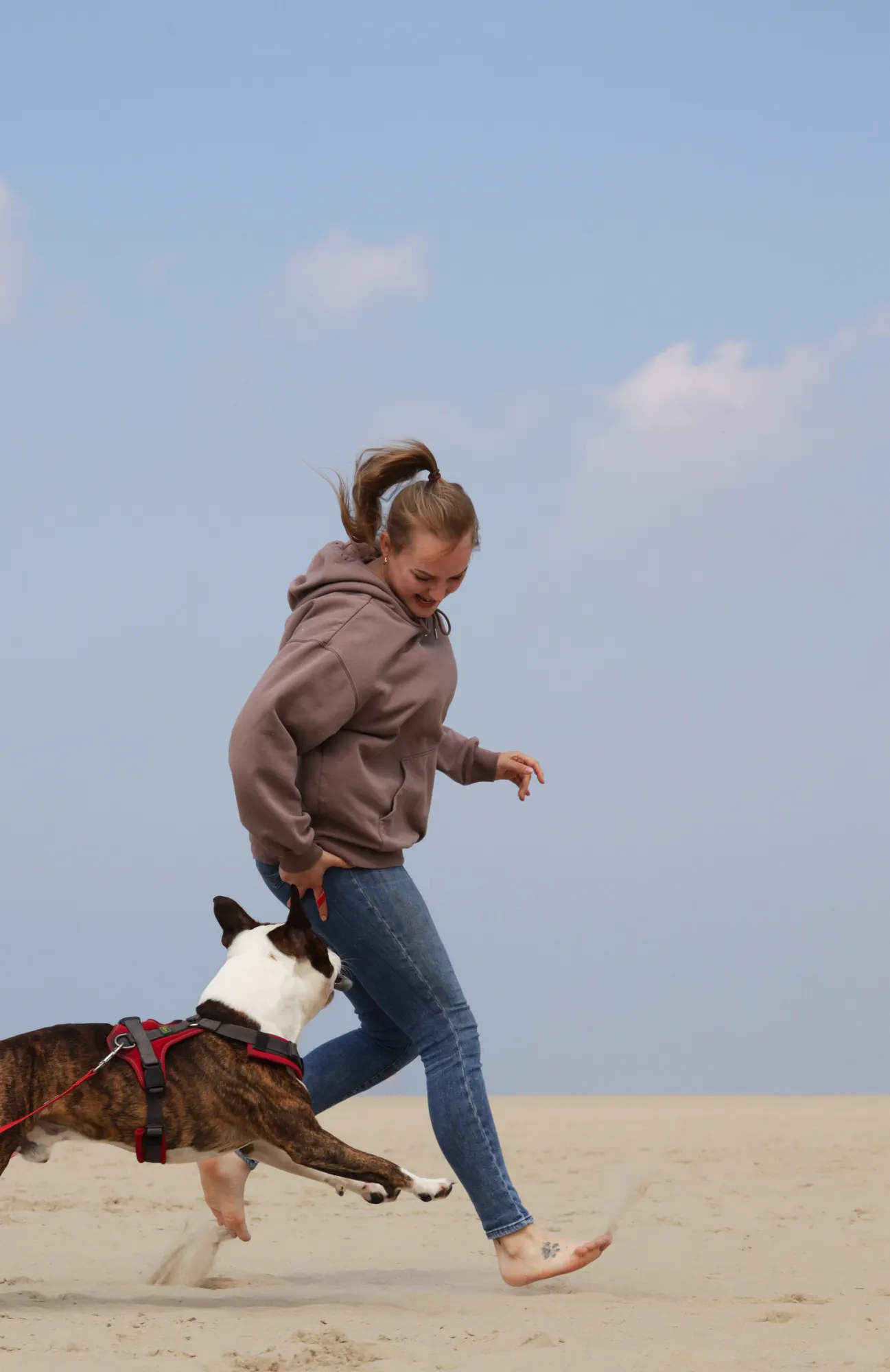
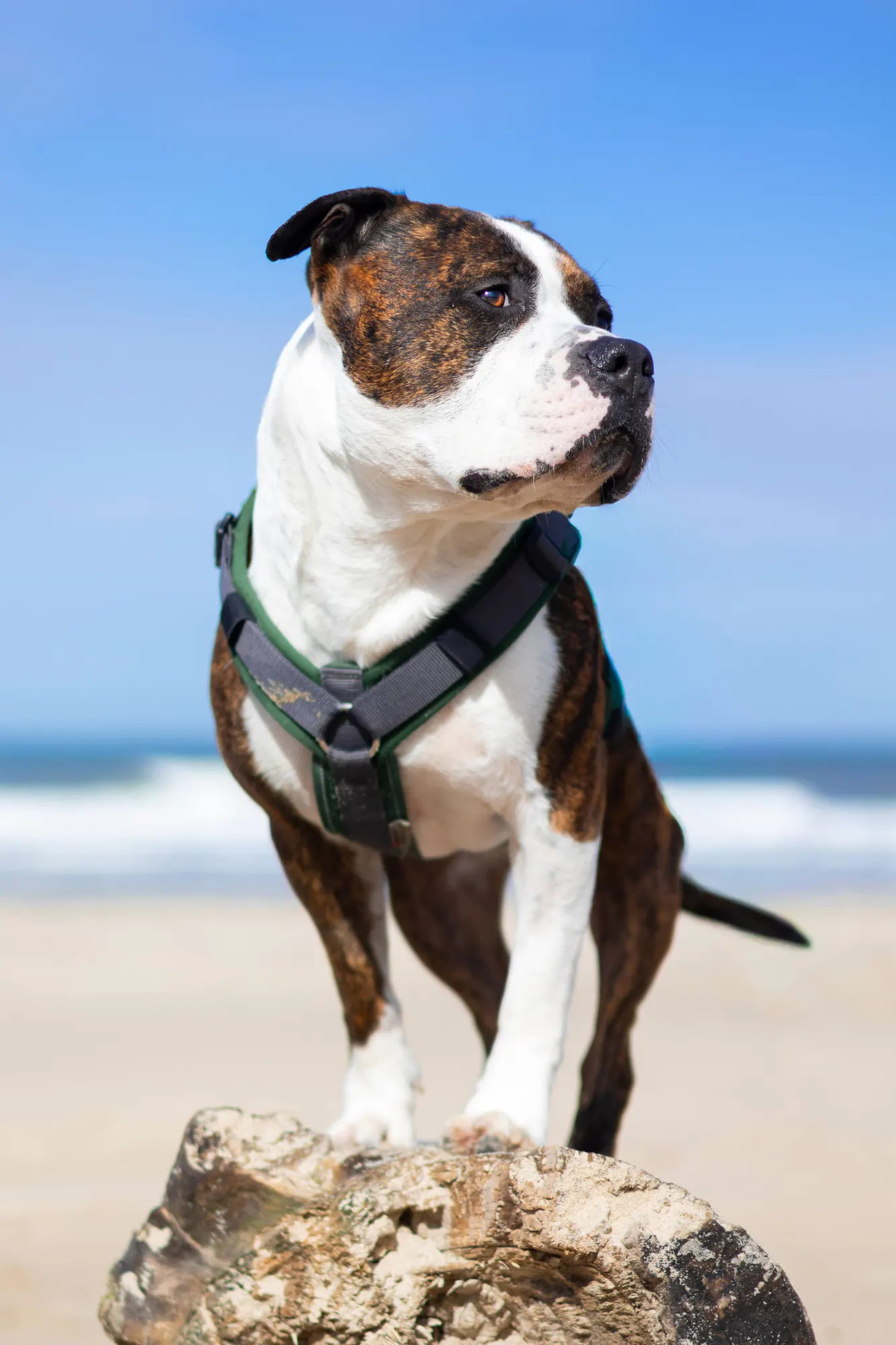
Jessica Wlasenko: “Urmel is a funny, lovable dog who is obsessed with his stuffed pig and cucumbers. He’s incredibly open and friendly and sometimes seems to forget that he isn’t actually a lap dog. He can still be quite excitable and full of energy in certain situations, but when it really matters, he’s surprisingly sensitive and able to read a situation well. He loves people of all ages and is always happy to meet someone new. He’s also friendly and open with other dogs.”
I’ve become much more aware and confident when it comes to understanding dogs and reading their body language. He’s also taught me a lot about patience and staying calm.
What made you choose an AmStaff, and how has Urmel changed your life?
Jessica Wlasenko: “I’ve always had a soft spot for strong, powerful breeds, and I’ve always loved the character of terriers. I like that independent streak they have the fact that they question things and don’t always just do what they’re told. I had already done a lot of research about the breed before getting Urmel, and I knew that an AmStaff isn’t simply a dog you get because you like the way it looks. I was fully aware of the responsibility, training and commitment that come with owning one. Urmel has definitely changed my life. I’ve become much more aware and confident when it comes to understanding dogs and reading their body language. He’s also taught me a lot about patience and staying calm. As I said, terriers definitely have a mind of their own! Of course, Urmel brings so much joy into my life every single day. He really is my best friend.”
How do people react to Urmel when they meet him for the first time?
Jessica Wlasenko: “I always feel like there are two completely different groups of people. You either love this type of dog, or you’re uncomfortable around them or even afraid of them. There are plenty of people who are genuinely excited to meet Urmel. Most of them politely ask if they can pet him, and we often end up having lovely conversations. But then there’s the complete opposite. Some people deliberately walk around us, move their children to the other side of the street, or look at us suspiciously. When Urmel was still a tiny puppy, a little boy came running towards us because he wanted to pet him. When his father noticed, he quickly ran over and pulled his son away. It was clear that he was genuinely afraid of Urmel.”
What is the worst thing you’ve ever had to hear because of his breed?
Jessica Wlasenko: “I sometimes get comments on social media saying things like, ‘It’s irresponsible to own a dog like that he should be put down immediately,’ or, ‘One day he’ll bite someone anyway. Dogs like that should be banned.’ Even before Urmel moved in with us, we heard comments in real life such as, ‘Why would you want a dog like that?’ or, ‘Just imagine if he bites you one day.’”
Where do you think these prejudices come from?
Jessica Wlasenko: “I think a lot of these prejudices come from the image that has been created around these dogs over many years. Sensational headlines featuring so-called dangerous breeds appear in the media again and again. Sometimes those images are even used when no dog of that breed was involved at all, simply because they attract attention. Naturally, those headlines and images stick in people’s minds. Many people have never actually had the chance to get to know these dogs themselves or see what they’re like in everyday life. They see a strong, muscular dog and automatically associate that with danger.”
I also see social media as a huge opportunity. I regularly receive messages from people telling me that Urmel has changed the way they think about these breeds. That’s exactly what I want to achieve.
Do you feel that the media and social media reinforce this image?
Jessica Wlasenko: “I definitely think the media and social media have a huge influence on how certain breeds are perceived. When an incident is reported, the breed is often immediately highlighted if the dog belongs to a so-called listed breed. That quickly creates the impression that the breed itself was the reason for what happened. But far too little attention is often given to how the dog was raised, trained, handled or kept. At the same time, I also see social media as a huge opportunity. I regularly receive messages from people telling me that Urmel has changed the way they think about these breeds. That’s exactly what I want to achieve. Not to convince people that every AmStaff is automatically a cuddly, harmless dog, but to show that behind the label ‘listed breed’ there is always an individual dog and that dogs shouldn’t be judged based on stereotypes.”
Do you believe a dog should be classified as dangerous based solely on its breed?
Jessica Wlasenko: “I don’t believe a dog should automatically be classified as dangerous simply because of its breed. At the same time, I also think it would be wrong to completely ignore the genetic traits and characteristics certain breeds have been bred for. Dogs have been selectively bred for specific traits over many generations, and those predispositions can still play a role today. I also don’t think size and strength should be ignored. A powerful dog can potentially cause more serious harm than a small dog if something goes wrong and that applies regardless of whether the dog is considered a listed breed or not. Owning a dog always comes with a great deal of responsibility.”
Where does justified caution end for you, and where does discrimination begin?
Jessica Wlasenko: “For me, there’s nothing wrong with being cautious around a dog you don’t know. I can completely understand that. If someone chooses to keep their distance from an unfamiliar dog at first, I think that’s perfectly reasonable. You don’t know the dog, and you don’t know how it might react. It’s always better to be a little too cautious than not cautious enough. For me, discrimination begins when that caution turns into a blanket judgement. If someone doesn’t know Urmel but automatically assumes he must be aggressive or dangerous purely because of his breed or assumes that I, as his owner, can’t control him then that has nothing to do with being cautious anymore.”
Can you say that these dogs aren’t inherently dangerous while still acknowledging that a powerful dog can cause more harm?
Jessica Wlasenko: “Absolutely. Those two things don’t contradict each other at all. An AmStaff isn’t automatically dangerous simply because it’s an AmStaff. At the same time, it would be irresponsible to ignore the physical strength and capabilities of these dogs. A large, powerful dog simply has more strength than a small dog. If a serious incident does occur, the consequences can therefore be more severe.”
Has there ever been a moment when someone completely changed their opinion about listed breeds because of Urmel?
Jessica Wlasenko: “A friend of mine is generally afraid of all dogs because she had some bad experiences with them in the past. At first, she was very scared of Urmel and didn’t even dare to pet him. But the more often she saw him, the more comfortable she became around him. Now she can even give him treats herself. She always says what a wonderful dog he is and how well-trained he is. She’s still afraid of unfamiliar dogs, but she has completely fallen in love with Urmel. That makes me especially happy because she has a general fear of dogs, yet she has grown so fond of a dog that many people automatically assume is dangerous.”
To me, Urmel is so much more than a breed or a label. He is my dog, my companion and a huge part of my life.
What would you like people to take away from Urmel’s story?
Jessica Wlasenko: “More than anything, I’d like to say thank you for giving Urmel and, through him, so many other dogs who are labelled as ‘dangerous breeds’ a platform and a voice. To me, Urmel is so much more than a breed or a label. He is my dog, my companion and a huge part of my life. If our story can help even one person see these dogs a little differently or simply encourage someone to stop focusing only on the breed and start seeing the individual dog then I feel like we’ve already achieved something really meaningful.”